
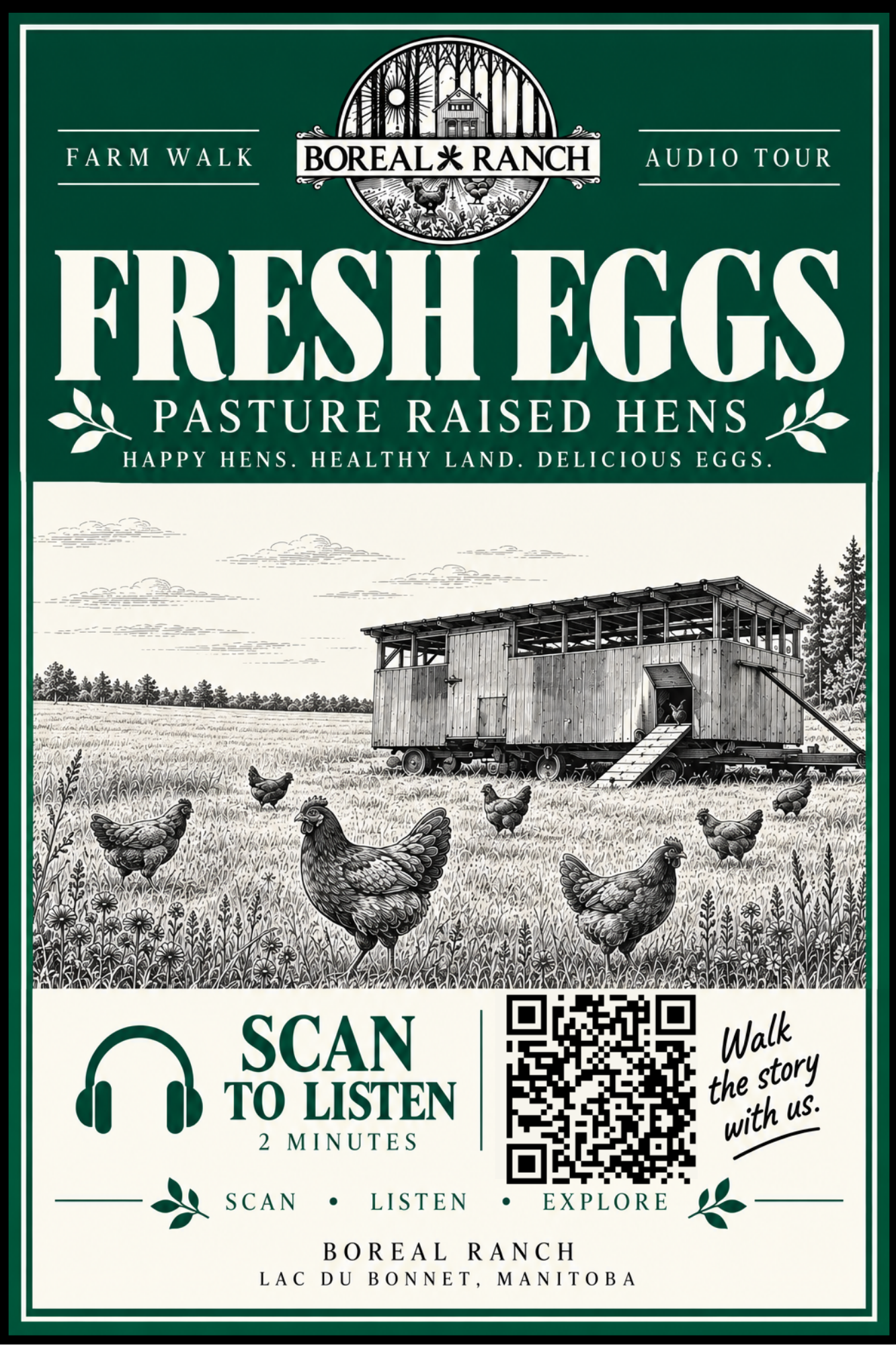
.These are our pasture-raised laying hens.
We raise five different breeds — Blue Azur, Bregs Browns, Leghorns, Olive Eggers and Black Marans. The reason we have such a mix is because it gives us this beautiful variety of egg colours.
Some may not be the most efficient birds, but as we always say around here, diversity is the spice of life on the farm. We believe having diversity in our animals, our crops and our enterprises is one of the best ways to build a resilient farm.
Right now, we have about 150 hens, with another 60 chicks in the brooder waiting to make their way onto pasture.
From the day they’re born, it takes roughly four months before they begin laying, and once they start, they'll generally produce eggs for about two years.
Our hens live behind electric fencing that we move onto fresh pasture every week. They spend their days outside, scratching, pecking, hunting for bugs and critters — basically doing what chickens naturally love to do.
Every evening, they head back into the Eggmobile, where they sleep safely off the ground. The Eggmobile also houses their nesting boxes, so this is where they come to lay their eggs.
This is actually one of our most efficient farm enterprises. It only requires one touch a day. We come in, make sure they have food and water, collect the eggs, and the automatic door takes care of letting them out in the morning and closing them in at night.
And if you see the hens running toward you, it's probably because they think you might have something good to eat! We give them some kitchen scraps and garden scraps, and they absolutely love them.
Because our hens spend so much of their day outside foraging, we think you can taste the difference in their eggs. The yolks are thick and creamy, and the eggs are beautiful. Our regular customers can tell a Boreal Ranch egg the moment they crack one.
In the winter, the hens move into our hoop house, which is connected to an insulated building that can be heated if necessary. We put hay down for them so they can scratch and forage, and they still get plenty of natural light and sunshine.
They don't get quite as many bugs in the winter… but they still get to live a pretty good chicken life.”